Claire Brown – Wednesday 1st July 2026 – 8.30am.
Advanced assessment, diagnosis and treatment at home; fewer patients taken to hospital and a service that is far better prepared to respond are all the hallmarks of 20 years of transformation at West Midlands Ambulance Service (WMAS).
Today, the Trust celebrates two decades since it was set up by combining several county ambulance services into a single regional organisation serving more than 6 million people.
Over those 20 years, WMAS has transformed every aspect of the service from clinical care and technology to fleet, estates and workforce development helping establish it as one of the UK’s leading ambulance services.
Ambulance staff now take less than half of the patients that call 999 to hospital using advanced assessment either in person or over the phone to make a diagnosis and provide treatment at the scene or through direct referral to community services.
Investment in digital technology, electronic patient records, vehicle tracking and modern communications has enabled crews to make faster, more informed clinical decisions including letting receiving hospitals see data in real time on the patients being brought to them.
The Trust has also invested significantly in its infrastructure that staff work from, developing modern operational hubs which include modern facilities for staff so that they have good facilities for downtime and learning. They also include hi-tech fleet support, vehicles are made ready for the next shift by dedicated staff and the most modern leet in any ambulance service in the UK.
We have some of the most resilient Emergency Operations Centres and dedicated training facilities that support a 24/7 mobile healthcare service. As the UK’s first University Ambulance Service, WMAS has also helped drive the professionalisation of paramedicine through education, research and specialist clinical roles. This now includes the first degree apprenticeship where staff undertake all of their training within WMAS, the first such course in the country.
Over the past 20 years, WMAS has reached several landmark milestones, including becoming an NHS Foundation Trust in 2013 and the UK’s first University Ambulance Service in 2018.
It has also responded to some of the most significant challenges in modern healthcare, including the COVID-19 pandemic, major weather events, national emergencies and the Birmingham 2022 Commonwealth Games.
Chief Executive Officer Anthony Marsh said: “As we celebrate 20 years since the creation of the merged West Midlands Ambulance Service, I want to thank every member of staff for the incredible difference you make every day.
“Whether responding during the recent heatwave, supporting our communities through the pandemic, or dealing with the many challenges we’ve faced over the past two decades, our staff have always worked together to provide the very best emergency healthcare.
“During that time we’ve transformed as an organisation, embracing new technology, modernising our fleet and estates, developing our workforce and continually improving the care we provide to patients.
“I’m immensely proud of everything we’ve achieved together over the last 20 years, and I look forward to seeing the service continue to innovate and deliver outstanding care for many more years to come.”
ENDS
- Formed in 2006 through the merger of county ambulance services (Staffordshire, Hereford & Worcester, Shropshire, Coventry & Warwickshire and West Midlands).
- Now serves more than 6 million people across the West Midlands.
- Paramedics have evolved from primarily transporting patients to hospital to delivering advanced assessment, diagnosis and treatment at the scene.
- More patients are now treated safely at home or referred directly to the most appropriate healthcare service. Only around 46% of patients are taken to A&E with over 20% now given advice over the phone by experienced paramedics and nurse. The other patients are treated at the scene.
- Introduction of electronic patient records.
- GPS-enabled dispatch and vehicle tracking.
- Control working on a virtual system over multiple sites.
- Advanced clinical equipment and digital communications.
- Electronic referrals to hospitals and community services.
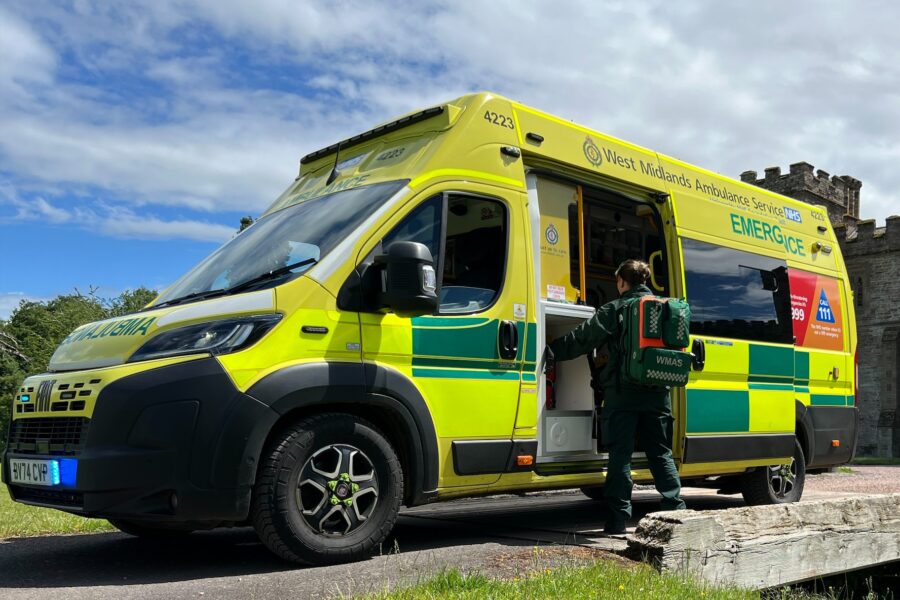
- Modern ambulance fleet with improved equipment and safety features.
- The Trust introduced the first fully electric emergency ambulance
- Purpose-built Make Ready centres prepare ambulances for frontline crews.
- Investment in operational hubs, Emergency Operations Centres and staff facilities.
- Became the UK’s first University Ambulance Service in 2018.
- Became the first Trust in the country to run an apprenticeship to degree level in house.
- Expansion of specialist and advanced paramedic roles.
- Increased focus on research, innovation and continuous professional development.
- Trained more than 1,000 student paramedics
Key milestones
- 2006: Regional merger creates West Midlands Ambulance Service.
- 2013: Achieves NHS Foundation Trust status.
- 2018: Becomes the UK’s first University Ambulance Service.
- 2020: Leads the regional ambulance response to the COVID-19 pandemic.
- 2022: Plays a key role in supporting the Birmingham Commonwealth Games.
- Present: Record demand, hospital handover delays are greatest challenges, driving continued innovation in fleet, technology, workforce and patient care.