
Open water may look inviting, especially during warm weather, but it can be far more dangerous than it appears. According to Royal Life Saving Society (RLSS) UK’s National Drowning Report 2023, there is a clear relationship between warmer weather and an increase in fatal drowning incidents with almost half happening in the summer months. While lots of people now enjoy the health benefits of regular open water swimming, for most people, it’s something they only do when the weather warms up. If that is you, a friend or family member, understanding the risks of going into open water and knowing what to do in an emergency can help prevent you becoming a casualty or even saving your life.
Hidden Dangers in Open Water
Unlike swimming pools, open water like lakes, rivers, quarries and reservoirs can conceal hazards that are not immediately visible from the surface:
- Cold water shock – Even on hot days, water temperatures can still be dangerously low beneath the surface. Anything below 15°C is defined as cold water and can seriously affect your breathing and movement. Sudden immersion can cause involuntary gasping, rapid breathing, panic, increased heart rate and loss of swimming ability. All of this can happen very quickly.
- Lack of safety equipment – lifeguards or safety equipment such as life rings or safety floats aren’t often provided in open water locations which means help isn’t quickly available.
- Difficult access or terrain – Remote or difficult access to open swimming locations means an increased difficulty for rescue by the emergency services.
- Strong currents and undertows – Rivers, canals and reservoirs may have powerful currents that can quickly overwhelm even strong swimmers.
- Sudden changes in depth – Water can become deep unexpectedly, making it difficult to regain footing.
- Submerged objects – Rocks, debris, drains, branches and other hidden obstacles can cause injury or entrapment.
- Poor water quality – Open water may contain pollutants, bacteria or blue-green algae that can pose severe health risks.
- Steep or slippery banks – Getting out of the water can be much harder than entering it, particularly on muddy or steep embankments.
Water safety for teenagers
Tragically, 75 children aged 13-17 years died in open water incidents between 2018 and 2022 with three-quarters taking place in the summer months. The RLSS UK’s National Drowning Report 2023 outlined that inland open water, notably rivers and lakes, are the most likely locations for a teenager to lose their life. While teenagers often see themselves as young adults, it’s important for parents and carers to understand the risks and have open conversations about water safety with them given how many have lost their lives. Here’s the situations worth talking to your teenager about according to the Royal Life Saving Society UK:
Group settings often encourage risk-taking, especially around water. Teens overestimate their abilities and underestimate hazards
- Popular in warm weather, especially with groups.
- Rivers, lakes, and canals can hide submerged objects, sudden drops and thick weeds that can entangle limbs causing panic.
- Water may be shallower than expected or contain hazards that can cause serious injury and make it difficult to get out.
- This is a leading cause of spinal injuries and drowning.
- Cold water shock – sudden immersion can cause involuntary gasping, rapid breathing, panic, increased heart rate and loss of swimming ability. All of this can happen very quickly.
- Cold water shock causes an involuntary gasp and loss of breathing control within seconds – even for strong swimmers.
- Even confident swimmers can quickly lose strength, control and coordination. Panic makes it worse.
- Strong currents quickly drain energy and weirs, sluices, or lock systems (powerful structures) can trap or pull you under.
- Difficulty getting out of the water
- Impairs judgement, balance, and the body’s ability to respond.
- Often linked with accidental slips, falls, and poor decision‑making.
- Inflatables can blow away or flip.
- Improvised rafts can collapse or trap limbs.
- Banks can be unstable or covered in algae.
- Accidently falling into deep water, from slipping or a misjudged step, catches teenagers off guard.
- Risk of propeller injuries, being hit by a vessel, or becoming trapped under pontoons.
- Many teenage fatalities happen when a friend gets into difficulty, and others jump in.
- Panic and cold water shock can overwhelm even strong swimmers, making rescue extremely dangerous without training.
The Water Safety Code
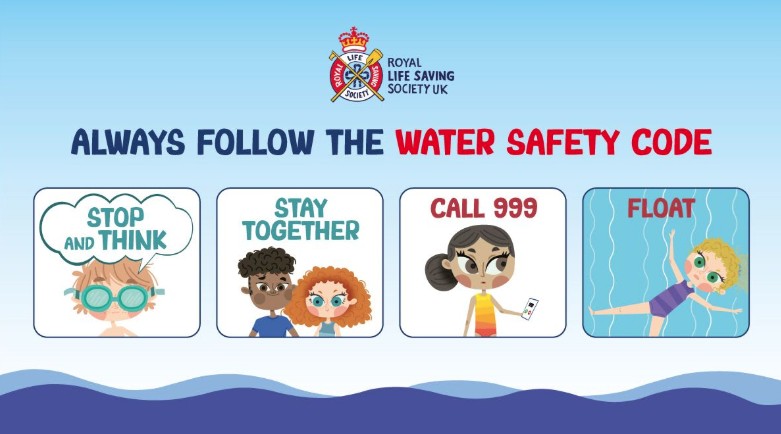
Accidents are generally preventable with a little knowledge and judgment. Here’s the Royal Life Saving Society UK’s Water Safety Code for staying safe in the water:
What to do if You Find Yourself in Difficulty
If you fall into water unexpectedly or find yourself in difficulty in water whilst swimming, stay calm, float on your back and call for help. Suffering the effects of cold water shock? Float to live:
- Tilt your head back: Keep your airway clear and your ears submerged in the water.
- Relax and breathe: Fight the urge to panic and try to get your breathing under control.
- Spread your limbs: Extend your arms and legs to stabilise yourself in the water.
- Scull if needed: Gently move your hands and legs to help you stay afloat.
- Wait for help: It is completely normal if your legs sink (everyone floats differently). Once your breathing is steady, signal for help or swim to safety
- If you get tired, cold or stuck in a rip current floating also works here too.
What to do if Someone Else Is in Trouble
- Call 999 immediately and ask for the appropriate emergency service (Fire and Rescue, Ambulance or Coastguard depending on the location).
- Encourage the person to float on their back.
- Throw something that floats to them if available.
- Do not enter the water yourself unless you are trained and equipped to carry out a rescue.
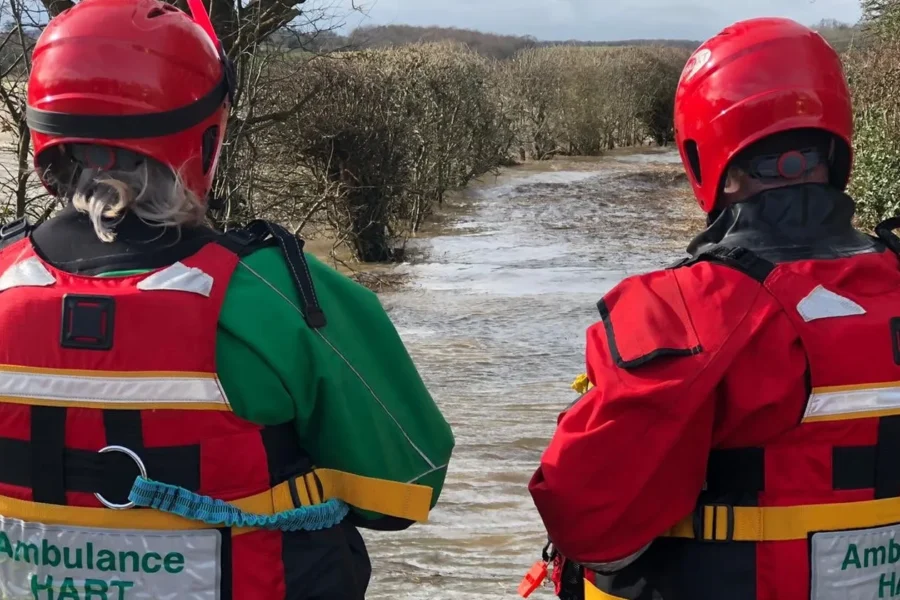
Each year when the weather warms up, each year West Midlands Ambulance Service responds to people who have been injured or sadly lose their lives in water related incidents. We’re urging people not to enter open water, like lakes and rivers, if there’s no lifeguard or safety measures in place. Watch Hazardous Area Response Team (HART) Manager Ben explain more.