Claire Brown – Monday 27th October 2025 – 8.30am.
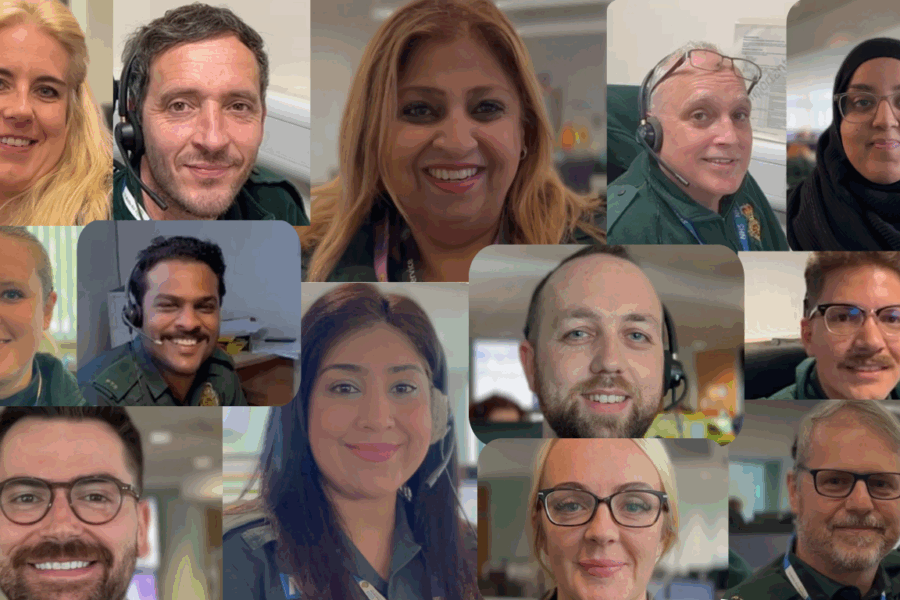
West Midlands Ambulance Service (WMAS) is celebrating the incredible staff who wear headsets and work tirelessly behind the lights and sirens to help patients across the West Midlands every single day.
Whether it’s answering a 999 call from a distressed parent with an unwell child or booking a hospital journey for a regular dialysis patient, our 992-strong team of control room staff work in harmony with our front-line colleagues often being the very first voice a patient hears when they call WMAS for help.
The Trust operates two Emergency Operations Centres, based in Brierley Hill and Stafford. Last year, WMAS received a staggering 1,576,636 emergency 999 calls, which on average were answered in less than one second.
Jeremy Brown, Emergency Operations Centre & Operational Planning Director, said:
“It’s a big responsibility being that voice on the end of the phone when someone calls 999 for help as, often, it’s that caller’s very worst day. Our call assessors are trained to deal with every eventuality, remaining calm and focused to get the vital information needed to determine the right care for that patient as quickly as possible.
What most people don’t realise is that while a call assessor is asking questions during a 999 call, there’s a team of dispatchers, controllers and clinicians already working together to organise the right help. I’m exceptionally proud of my team. Despite all the pressures they face, they always have patient care at the heart of everything they do.”
It’s not all emergency work in control, however. The Trust also operates five non-emergency Patient Transport Service (PTS) contracts across the West Midlands and Cheshire, ensuring patients get safely to and from their hospital appointments. There are four PTS control rooms based in Birmingham, Stafford, Coventry and Cheshire, which together booked 806,646 patient journeys last year.
Michelle Brotherton, Non-Emergency Service Operations Delivery Director, added:
“Without our control room staff answering calls, booking journeys and liaising with our PTS crews out on the road, we simply wouldn’t be able to provide our service. They are an integral part of patient transport and always go above and beyond to help our patients.”
As part of International Control Room Week, WMAS pays tribute to its dedicated control room teams who are the calm, compassionate staff helping patients every hour of every day.
To find out more about the work of our control rooms, visit www.wmas.nhs.uk.
ENDS