Introduction
West Midlands Ambulance Service University NHS Foundation Trust (WMAS) has taken a bold and methodical approach to cultural transformation, compassionate leadership, inclusive practice, and staff engagement at the heart of its improvement strategy.
This case study explores how WMAS has strategically focused on moving towards a desired culture and behaviours through a structured combination of cultural insight, leadership capability-building, and behavioural alignment thereby strengthening the link between workforce experience and the quality of care delivered.
Why focus on Culture
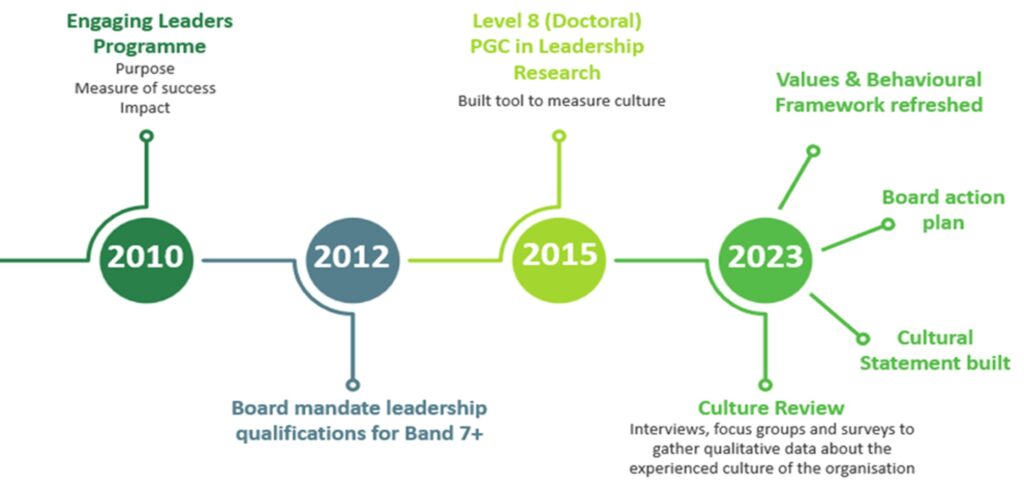
Culture is not a soft issue; it is a measurable, improvable driver of patient outcomes, staff experience, and organisational effectiveness. In 2010, WMAS recognised that sustained transformation would not be achieved through systems and processes alone, but through an engaged, compassionate, and values-led workforce.
Amid rising pressures and evolving service demands, the Trust sought to answer a critical question:
“What does it feel like to work here, and how does that impact our patients and one another?”
Hence over the years there have been many interventions and inquiries to find out how our staff experience our culture, and what changes they would like to see.
The academically accredited Engaging Leaders programme was built. The focus was, and is on the impact that participants make on improving culture within their sphere of influence in order to support our staff to be engaged and supported, so that our patients receive the best possible care and experience from us. It allows leaders to systematically explore how values and behaviours influence everyday interactions, and where there are gaps between intention and reality.
WMAS also acknowledged that culture is dynamic, shaped continuously by leadership behaviours, operational pressures, and the extent to which staff feel empowered to contribute and challenge. A values-based leadership model was needed to embed the kind of organisational culture capable of responding to change and improving staff wellbeing.
As a WMAS employee, student or volunteer you will be treated with compassion. We are kind, empathetic, supportive, non-judgmental and appreciative. We are curious about what makes us unique and about what we have in common.
We will respect each other’s boundaries and always be honest, truthful and respectful. We focus on excellence in all we do so that our patients, service users and partners have the best possible outcomes and experiences. We will hold ourselves to account for our behaviours and will not shy away from holding others to those same standards and behaviours.
How we built and structured the change
Culture Review as the Starting Point
WMAS began by listening to their people using structured interviews, focus groups, and internal surveys to generate qualitative insights into how culture was experienced on the ground. These insights helped to shape:
- A Culture Statement for the first time, clearly setting out how everyone should experience the organisation.
- A co-designed Values and Behaviours Framework (2023)
- A robust Culture Scoreboard that triangulated metrics such as staff survey results, FTSU concerns, sickness absence, compliments/complaints and turnover.
This combination of qualitative and quantitative data enabled leaders to understand not just what was happening but gain a deeper insight into why.

Embedding the Engaging Leaders Programme as the Delivery Vehicle
The programme is the principal mechanism through which cultural insight is translated into action.
Delivered in partnership with Coventry University, it features two academic pathways:
- CPD Tranche for those not yet in leadership positions – Level 5 Certificate in Professional Development
- Senior Tranche (Band 7+) – Level 6 Advanced Certificate in Professional Development
Each programme combines facilitated learning development days with real-time application.
Participants complete 360° feedback, engage in personal reflection using tools like MBTI, and deliver a Service Improvement Project grounded in Trust priorities.
What we did: Interventions and Tools
Shifting Language and Leadership Mindsets
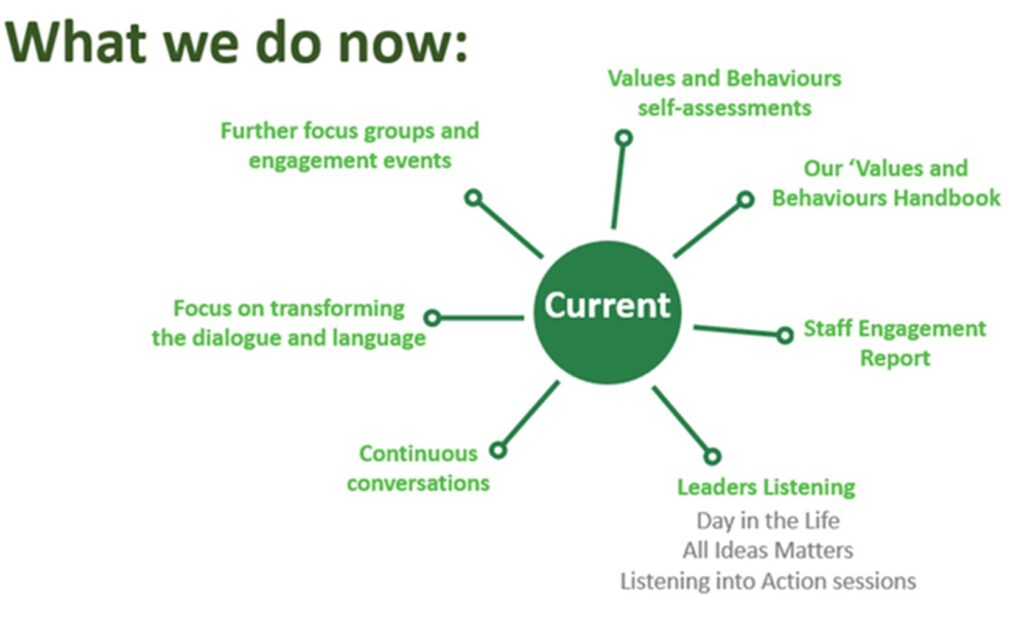
One of the most visible changes was in the language of leadership. The programme helps to shift leadership conversations from a compliance-driven, transactional style to one rooted in curiosity, compassion, and empowerment.
Through Coaching for Vital Conversations (a two-day module to support participants in having those important conversations in an effective way), MBTI feedback, and leadership development days, participants develop greater emotional intelligence, personal impact awareness, and an ability to lead through inclusion rather than hierarchy.
Embedding the Values and Behaviours Framework
The Values and Behaviours Framework was launched in 2023. As part of this work, colleagues were actively involved through engagement and co-design activity. This included focus groups, interviews, surveys and opportunities to test and refine ideas collaboratively. By creating space for open dialogue and shared ownership, the Trust ensured that the approach was shaped by those closest to the work, building confidence and commitment to change across all levels of the organisation.
This framework provides clear expectations for how everyone in WMAS should interact and lead. Key features include:
- “Do” and “Do Not” behaviours grouped under the values: Excellence, Integrity,
- Compassion, Inclusivity and AccountabilityIntegration into recruitment, induction, performance reviews, team learning, policies and senior leadership decision-making
- A self-assessment tool used for individual and team reflection.
The framework is widely visible on WMAS sites, and line managers are encouraged to make it a living tool as something to be used in conversations, not just displayed on posters.
WMAS Values and Behaviours Framework
Impact: What we achieved and learned
All the elements described above have delivered impact at both individual and organisational levels.
Improved Staff Experience and Engagement
From the Staff Engagement Triangulation Report (2021–24):
- Engagement scores rose from 4.75 (2021) to 4.96 (2024)
- The percentage of staff who felt safe to raise concerns rose to 51.8%.
- Turnover and resolution cases began to decrease in areas where Engaging Leaders graduates were influencing culture.
Participants reported feeling more empowered, confident, and connected to the values of the organisation. Many described a “lightbulb moment” in moving from being decision-makers to facilitators of team growth.
“The course gave me the confidence to lead authentically and to let others lead too. I learned that leadership is less about control and more about creating space.”
Senior Tranche Participant
Measurable Leadership Development
Course evaluation showed:
- 100% pass rate across both tranches
- Progressive improvement in leadership capability as evidenced by 360° feedback.
- Uptake of Service Improvement Projects across departments and some escalated to senior forums.
Leadership Responsibilities and Ownership
- Leadership ownership has been essential in sustaining momentum at WMAS:
- Executives model behaviours and participate in learning events.Line managers are expected to support protected time for participants.
- Mentorship and role modelling are built into the programme structure.
The Values and Behaviours Framework outlines explicit responsibilities for leaders, particularly the duty to intervene when behaviours fall short and to recognise excellence when it appears. Leadership development is not seen as an individual pursuit but as a system responsibility.
Next Steps and Recommendations
WMAS continues to evolve its cultural strategy with the Engaging Leaders Programme at its centre.
- Recommendations include:
- Strengthening Board visibility across Engaging Leaders Programme tranchesSharing completed Service Improvement Projects Trust-wide
- Creating an Alumni Network to support ongoing peer learning and mentoring
There is also work underway to visualise Culture Scorecard metrics at team level, enabling real-time feedback and proactive action by managers.
Conclusion
The Engaging Leaders Programme has become a strategic and operational driver of culture change at WMAS. It connects insight with action, learning with leadership, and individual growth with system impact.
Through deliberate design, inclusive engagement, and alignment with organisational values, WMAS is showing what’s possible when culture isn’t treated as an initiative but as the core of how the NHS leads, listens, and delivers.